NEED ENERGY · ANALYSIS & VISION
Algeria: turning our energy into a strength for our future
 CONSEILLER · ANALYSER · ACCOMPAGNER
Could using energy better become one of Algeria’s most valuable shared projects? Better buildings, avoided consumption and well-maintained equipment can support comfort, skills and national opportunities.
Algeria can aspire to become a major player in renewables and energy exchanges between Africa and Europe. Residents, government, businesses, research and international partners all have a role.
This Need Energy analysis, dated 26 October 2026, distinguishes published data, announced programmes and our proposals. Numerical scenarios are illustrative, not official forecasts or guarantees.
An ambition grounded in facts
The transmission system’s peak demand reached 20,628 MW in 2025, according to the Algerian system operator [1]. This is peak power, not continuous consumption.
IRENA records 601 MW of renewable electricity capacity at the end of 2025, including 437 MW of photovoltaics, within its statistical scope [2]. Installed MW are different from annual MWh or GWh generated.
The ministry presents a 15,000 MW renewable target for 2035 and a 3,200 MW photovoltaic programme announced to begin operation from 2026 [3]. An announcement does not establish that all capacity is already operating.
Use energy better to support life and development
The transition should help families heat, cool and work comfortably with less unnecessary consumption.
Habits matter, but so do insulation, solar exposure, equipment, maintenance, design and financial means. Responsibility cannot rest on residents alone.
Useful support starts with listening. Families, shops, farms and factories face different constraints and priorities.
 Explore image ↗
A shared ambition: contributing to our country’s success
Algeria’s success is an ambition that brings us together. Public energy programmes open opportunities to which businesses, researchers and citizens can contribute at their own scale.
At Need Energy, we want to support this momentum by addressing local needs, developing Algerian skills and helping clients make informed energy choices. Our approach aims to complement efforts for the country’s future.
We propose recognising energy saved, peak demand managed, renewable generation used and skills developed in Algeria. Public buildings, businesses and homes can all contribute.
Training, partnerships, accessible solutions and shared experience can strengthen this collective effort. These are our proposals, not announcements of new public measures.
Partnerships that build lasting local skills
Assess partnerships across their lifetime: equipment quality, warranties, spare parts, maintenance, training and cost control.
Algerian companies, universities and research centres are essential to local adaptation. International suppliers and financiers can contribute technology, funding and markets through balanced cooperation.
The 12 February 2026 Algeria–EU energy dialogue covers renewables, efficiency and interconnections. GIZ implements TaqatHy+, with technical-cooperation funding of €15 million from the EU and €13 million from Germany [4]. This does not finance the entire national transition.
 Explore image ↗
Exports: an opportunity to prepare, not an automatic surplus
Sunshine and land are strengths, but investment, grids, flexibility, buyers and viable contracts are also needed.
Installed capacity minus peak demand is not a saleable reserve. Plants may be unavailable and the system needs security margins.
Exports depend on production timing and actual interconnection capacity. Algeria–EU discussions still identify investment and regulatory requirements for implementation [4].
Saving gas-generated electricity is useful but does not make it green. Distinguish savings, renewable generation and genuinely exportable volumes.
A scenario to understand the scale
Use an illustrative 100 TWh annual baseline, not a measured final-consumption figure or national forecast.
A 10% reduction in the corresponding generation need would avoid 10 TWh/year, subject to feasible efficiency programmes.
An additional 5 GW of solar at an assumed 23% capacity factor would generate about 10.1 TWh/year before possible utilisation constraints: 5 × 8,760 × 23% = 10,074 GWh. This is an assumption, not guaranteed performance.
The two levers do not create 20 TWh of immediately exportable power. Hourly operation, demand growth, storage, losses and grid constraints must be assessed.
Growth may absorb the gains
At a hypothetical annual growth rate of 4%, a 100 TWh baseline becomes about 121.7 TWh after five years.
Savings and renewables may therefore first support domestic development and limit additional gas generation. This would be valuable even without an immediate export increase.
Export revenue is not profit: 2 TWh sold at a hypothetical €50/MWh yields €100 million gross, before production, finance, transmission and operating costs. This is neither a market forecast nor a commercial offer.
What each participant could gain
Residents could gain comfort, lower avoidable costs and new professional skills if solutions remain accessible.
Government and utilities could better anticipate needs and potentially avoid investments and energy pressure through verified results.
Businesses and partners could build lasting markets in assessment, building improvements, equipment and maintenance, subject to quality and viability.
Algeria and the world could benefit from diversification and lower-carbon energy. Jobs, revenue and avoided emissions require project-specific assessment; we do not claim unsupported totals.
Our vision: Algeria retaining more of the value it creates
Our preferred sequence is to measure and correct now, scale proven solutions and training, develop renewables alongside grids and flexibility, and prepare economically justified exports.
Ambition should include skills, services, equipment and industrial products. A country gains more when it can design, maintain and improve what it builds.
Ecosystems and water must be protected. Large solar plants have site-dependent impacts, so biodiversity and environment belong in early design [5].
We support a transition that expands opportunities for Algerians and benefits the country over time. This is our position, not a certainty about the future.
Our young people are a strength. Giving them the means to build an Algeria among the most developed countries should be a shared ambition. Training, research, entrepreneurship and genuine responsibility are essential. This outcome must be built; it is not guaranteed.
Explore image ↗Need Energy’s contribution at our scale
At Need Energy, our work starts with advice, analysis and proposals suited to each client. At our scale, we want to turn national ambition into useful decisions.
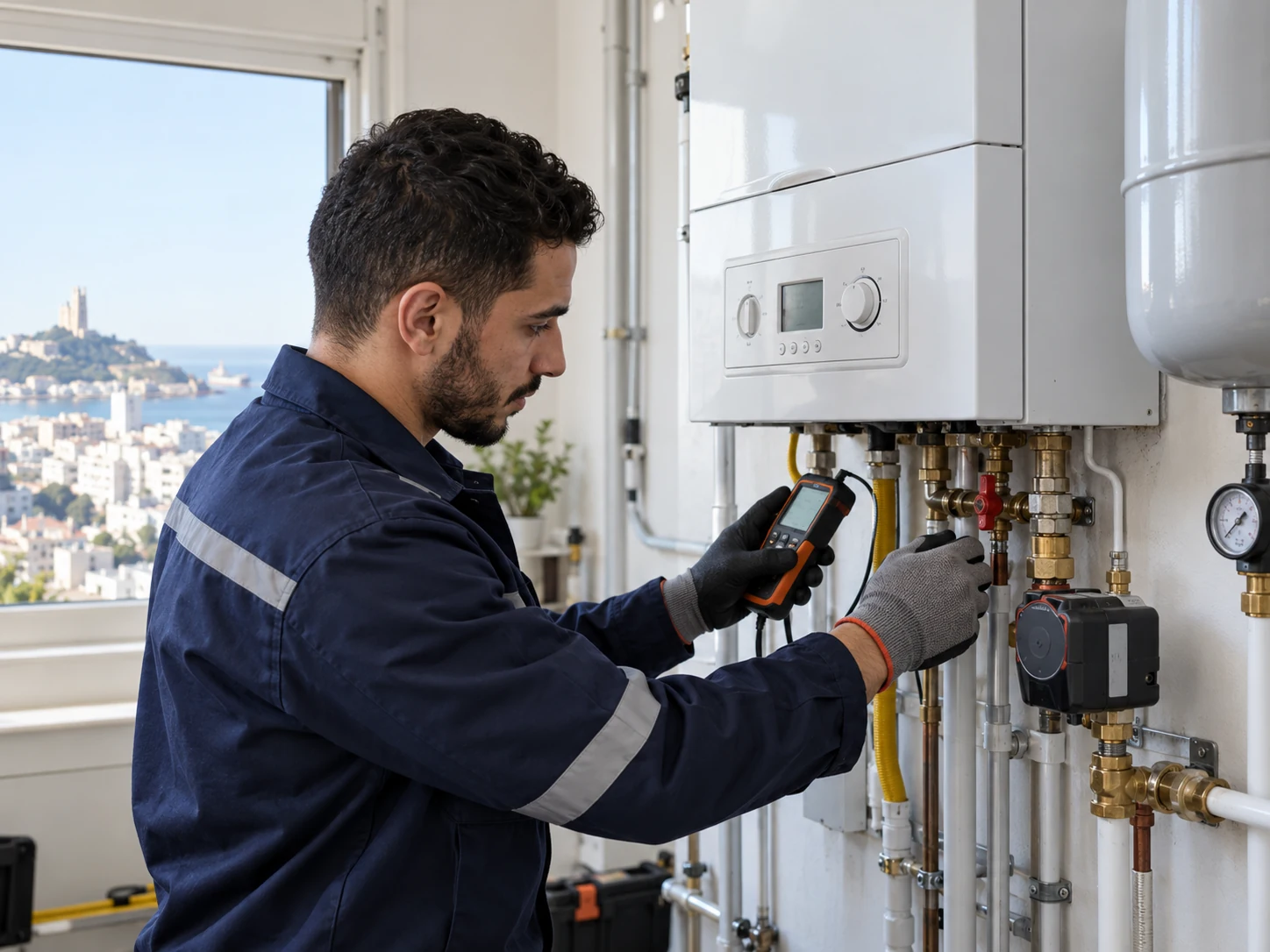
Consider a building with high bills and uneven comfort. We first listen to its occupants and understand uses, expectations and constraints. A visit and consumption analysis then help investigate settings, maintenance, insulation and unsuitable equipment.
The REBA report organises findings and options: immediate corrections, issues requiring further study and investments to compare. Assumptions, estimated savings and measured results remain distinct so clients can set informed priorities.
Our commitment continues through the support, follow-up and after-sales service agreed in the assignment. Developing Algerian talent, explaining our choices and learning from results is how we aim to contribute with clients and partners.
 Explore image ↗
Our energy. Our future. Our Algeria.
Citizens, businesses, craftspeople, researchers, trainers and institutions can share this ambition, each contributing skills and resources.
We hope others will discuss, improve and turn this vision into useful action. Progress also comes from sharing knowledge and checking what works.
One, two, three… together for tomorrow’s Algeria.
Share this commitment? Let’s discuss a practical project, skill or cooperation.
Build useful cooperation →Sources and method
- 1. Sonelgaz Transport électricité et opérateur système — Chiffres clés 2025 ↗
- 2. IRENA — Renewable capacity statistics 2026 (données 2025 / 2025 data / بيانات 2025) ↗
- 3. Ministère de l’Énergie — Programme annoncé le 2 novembre 2025 ↗
- 4. Commission européenne — Dialogue énergétique Algérie–UE, 12 février 2026 ↗
- 5. IRENA — Local environmental effects and benefits of large-scale solar PV plants, 2026 ↗
Sources consulted on 26 October 2026. Proposals and illustrative calculations are by Need Energy.